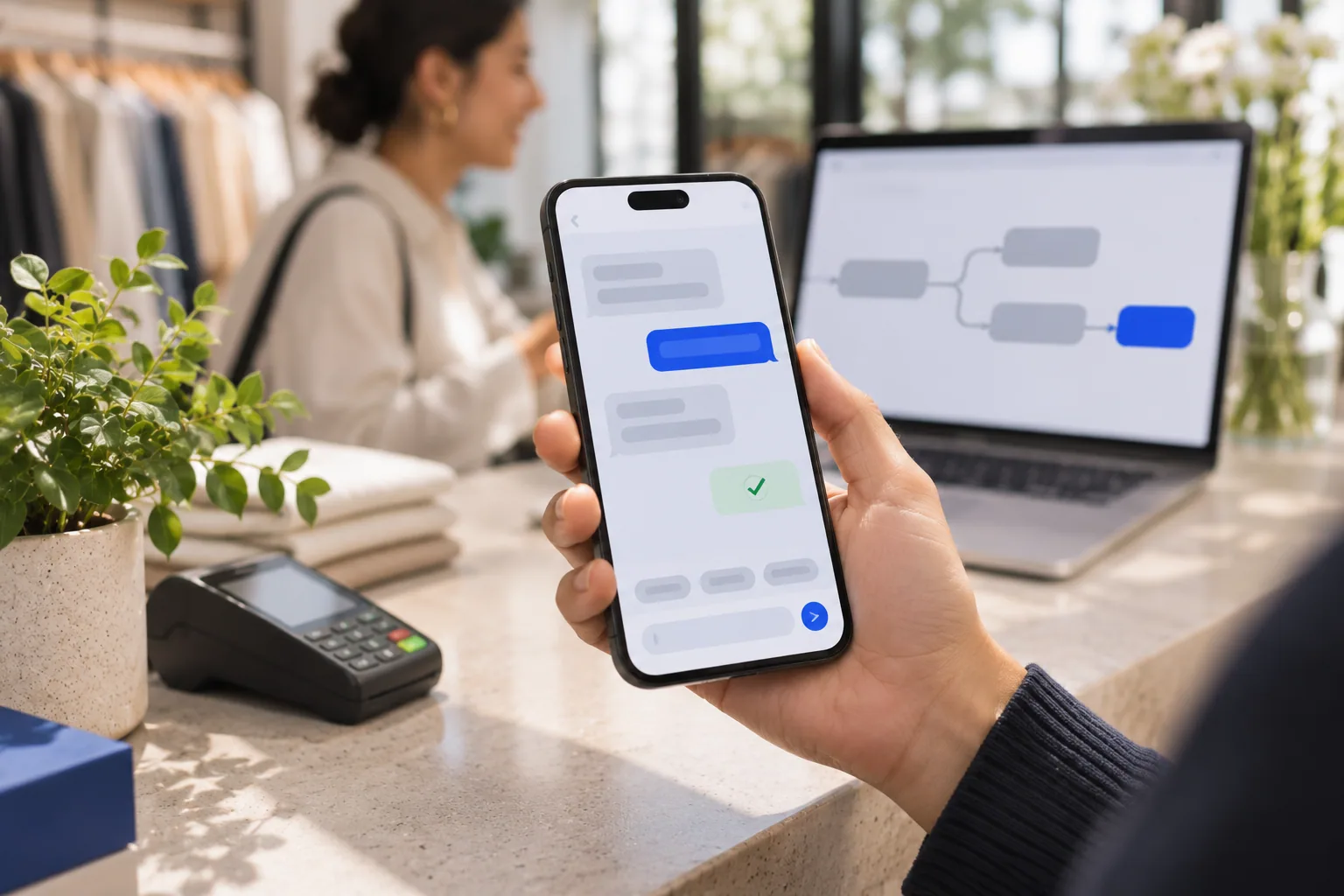
When a potential customer sends a message, the first business to reply well often wins the conversation. Automation makes fast replies possible around the clock. Used carelessly, it also makes businesses sound robotic at exactly the moment trust matters most.
The goal is not to automate everything. It is to automate the repetitive parts and make it effortless for a real person to step in at the right moment.
What to automate
These tasks are repetitive, time-sensitive and easy to get right with clear rules:
- The instant acknowledgement. Reply within seconds, confirm the message was received and set expectations for what happens next.
- Qualifying questions. Ask the two or three questions your team always needs: what service, what timeline, which location or budget range.
- Booking. Offer real available slots from your calendar and confirm the appointment in the chat.
- Reminders. Send a reminder before a call or visit, with an easy way to reschedule.
- Gentle follow-ups. Check in when a conversation goes quiet, once or twice, then stop.
- Routing and logging. Send each lead to the right person and record the conversation in your CRM automatically.
What to keep human
Some moments need judgement, empathy or authority that automation does not have:
- negotiating price or scope;
- complaints and anything emotional;
- complex, unusual or technical questions;
- sensitive topics such as health, money or legal matters;
- any moment a customer asks to speak to a person.
Design the hand-off before you build the bot
Most automation problems are hand-off problems. Decide these rules up front:
- Triggers: which answers, keywords or situations pass the chat to a person.
- Who receives it: route by service, language, region or availability.
- Context: the person taking over should see the full conversation and any answers already given, so the customer never repeats themselves.
- Response times: tell the customer when a person will reply, especially outside business hours.
Stay on the right side of WhatsApp and your customers
Messaging people on WhatsApp is a privilege, not a right. A few principles protect your account and your reputation:
- Get clear opt-in before sending business-initiated messages, and make opting out easy.
- Use approved message templates where WhatsApp requires them. On the WhatsApp Business Platform, messages sent outside the customer service window that opens when a customer messages you generally need a pre-approved template.
- Collect only what you need and handle personal data in line with the privacy laws that apply where your customers live.
- Keep follow-ups respectful. Frequent unsolicited messages lead to blocks and reports, which can limit your account.
Policies change, so check the current WhatsApp Business rules for your setup before you launch.
A simple first workflow
You do not need a complex system to start. A first version might be:
- A customer messages you from your website or an ad.
- An instant reply thanks them and asks what they need, with quick-reply options.
- Two short qualifying questions follow.
- Qualified leads are offered available slots and book directly in the chat.
- The lead, answers and booking are added to your CRM, and the right team member is notified.
- Anything unusual, sensitive or high-value is handed to a person straight away.
Launch that, watch real conversations for two weeks, then improve the wording and rules based on what customers actually say.
Measure what matters
- First response time: how quickly every lead gets a useful reply.
- Qualification and booking rates: how many conversations turn into appointments.
- Hand-off time: how long it takes a person to step in when needed.
- Opt-out and block rates: an early warning that messaging feels intrusive.
- Lead-to-customer conversion: whether faster follow-up is turning into revenue.
Thinking about automating your lead follow-up? Our AI and automation team designs and builds WhatsApp, CRM and email workflows that keep a human touch. Book a free strategy call to map your first workflow.